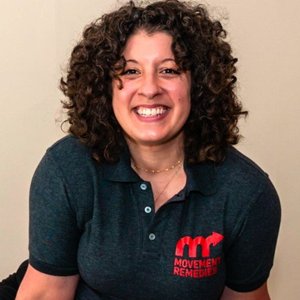
I took the leap to become a Pilates teacher in 2017. I was working full time as an executive in a health care company and teetering on the edge of sanity in full blown burnout. I didn’t feel the strong conviction or passion to teach so many other instructors describe. I was just desperate for a new path that would look and feel different.
At the time, all I knew for sure was that Pilates was my happy place. For more than a decade it had been my go-to activity to soothe my tense, aching body and quiet my mind. Every time I went to the studio for a class I found myself lingering afterwards to just soak in the vibes. I dreaded going home, back to my laptop and nonstop meetings.
When I took the leap to sign up for the comprehensive certification, I was still only 50-50 on whether this was going to be the right move for me. I was introverted, in a larger body than everyone else I saw teaching, and uncomfortable in large groups. I was lost, with no sense of direction. I had strayed so far away from assuredness in my sense of self that I thought maybe this was the completely new context I needed to jolt me back to reality.
My Crossroads moment
The first time I taught a class on my own was in January 2018. My whole body was quivering as I prepared to teach a Reformer class followed by a mat class. I felt sick to my stomach the entire day. I had my class programming written down on cards so I could refer to them at all times. Most of all, I worried that because I worried I would struggle to engage with people and bring sufficient energy to the movement experience. I didn’t feel like I had the “pizazz” of most other teachers.
But when the evening was over, I was very surprised to discover that it was the most fun I had had at work probably ever. I was absolutely hooked. Magically, I actually left feeling more energized than when I arrived. I was not expecting to love it as much as I did. I felt connected to a sense of purpose for the first time in a long time. And, from what I could tell, the students liked it, too.
Of course, that crossroads moment was only the tip of the iceberg. I still had several months ahead of me before finishing the 500-hour curriculum and then testing out as a comprehensively certified teacher. The following year I did the NPCP exam, and I feel like that’s when the real training started as all the continuing education credits opened my eyes to the breadth of specializations available in this profession.
At least four years went by before I got really clear on exactly who I wanted to serve (clients with persistent pain who feel dismissed or unseen in traditional health and wellness spaces) and how I wanted to serve them (Movement Remedies).
Even now, having been a teacher for almost 8 years and owned my own studio for almost 4 years, it still feels like there is more growth ahead of me than behind me. It’s one of the things I love about this profession: It never gets stale because we and our clients continue to evolve as we learn and experience more, together.
There’s no “right way” to arrive at teaching
I share all of this to say that we each come to this work in very different ways and none is more valid than the others. Over the years, I have met teachers who have been in movement-oriented professions their whole careers, as well as those who have come to teaching in the autumn of their lives. I have met teachers who apprenticed alongside educators who learned directly from Joe, as well as people whose entry point to Pilates was related to rehab or athletics without mention of contrology.
All experiences are valid and lead to important, meaningful perspectives that benefit people. Each teacher’s path, just like each client’s movement journey, is informed by the individual histories and cultural reference points they carry with them. And that greatly influences the people they attract.
The teachers who have impressed me the most are the ones who build others up without strings attached and cultivate cohesive communities. These are people who are crystal clear on the values that underpin their teaching and the exact population around which they orient their services. These, in my opinion, are the foundational pillars of both a compelling brand and a fulfilling career. It’s not enough to just understand the Pilates system, because that’s not novel. We have entered an era of differentiation where market savviness and self-awareness are essential to thriving as a teacher.
Pilates in the spotlight
The Pilates industry is having a “moment” right now. It’s getting a lot of attention. Everyone from professional athletes to pop stars are singing its praises. What used to be a sort of fringe exercise modality known only to a wealthy few is now visible and accessible en masse. Social media is pumping out Pilates influencers and even grocery store chains are selling Reformers. With all that attention invariably comes proliferation and distortion.
What sometimes feels like mayhem can, I believe, turn out to be an opportunity for us to really double down on the integrity of our industry and align on some much-needed clarity. There are so many new teachers entering the field who aren’t weighed down by the dogma of lineage and are bringing fresh eyes to a century-old practice.
As the barrier to entry gets lower, it will hopefully force a conversation about what our profession demands and how we want to be perceived. With this rise in visibility we have a chance to push for the standards of service and training by which we want to be measured. Our collective voice is growing, which means a more powerful lobby for proper licensing and nationally recognized qualifications, as well as closer collaboration with complimentary clinicians.
Pilates has a lot to offer in the conversation around active aging and extending years of independent living for older adults. We would do well to focus on what we can all contribute rather than getting distracted by debates around who belongs inside the Pilates tent. Once we establish standardized criteria for Pilates teachers, as are required for most other qualified trainers and health professionals, we can move on to the important work of creating opportunities and carving out meaningful career paths across the spectrum of health and rehabilitation.
The amazing thing about you is…
Right now, it may feel like you are one in a sea of people all doing the same thing. Social media may give you the impression that you are shouting into the wind while other people with bigger platforms or greater visibility are snatching up all the clients. It just isn’t true.
While thousands of teachers may be out there delivering some variation of the same Pilates system we all know and love, your unique voice and personality and energy make your clients’ movement experiences different than anyone else’s. People may walk into your studio because they “heard Pilates is good for backs” (literally what got me into my first mat class), but they stay because they experience something transformative that they cannot find anywhere else. At the center of that, is you.
I don’t know what first drew you into this profession. If your experience has been anything like mine, perhaps you have found it to often be isolating and competitive, with teachers often seeing each other as a threat rather than a partner. But when we lean on the knowledge that each of us has something unique to offer, we realize that other teachers aren’t the obstacle to filling our schedules. It’s much more likely that the people who would benefit most from your services just don’t know about you yet.
We achieve more when we work together
In reality, teachers can be an amazing referral resource. We have all had those clients who tried Pilates once and decided it wasn’t for them. Isn’t it possible that they just weren’t a good fit for the particular movement experience we were dishing out? I know it’s hard because that feels very personal. But we just aren’t the best fit for every student, and I think if we flip our mindset that can actually be liberating. Congrats, you don’t have to try and please everyone! Just be yourself and the ones who love you will stay.
It’s like expecting everyone to love every flavor of ice cream. All ice cream is good, but people usually have that one flavor that calls to them over all the others. We don’t need to change who we are, but if we truly believe Pilates is beneficial for all bodies, we should try our best to help people find the teacher that lights them up. How incredibly impactful it would be to start telling clients, “if you don’t love your session today, I would be happy to help you find a teacher that is perfect for you.”
In this way, we could actually be helping each other by making sure that we get the most out of every ounce of energy (and money) that we throw at marketing Pilates to people. There would be no waste iIf collectively we know that all teachers are trying to help people navigate to the movement experience that best suits their needs. Then everyone – the studios, the clients, our communities, and the families that sustain them – with greater access to Pilates in settings that suit each specific need and goal; Everyone wins. And isn’t that the point?